



For a small business, renting space usually comes down to a tough decision: lock into a long-term lease or find something more flexible. In a market as fast-moving as Boston, the smartest move is often the one that lets you scale without the financial chokehold of a multi-year commitment. It’s no surprise that agile companies across Massachusetts are starting to look past the traditional options.
The New Reality of Renting Business Space in Boston
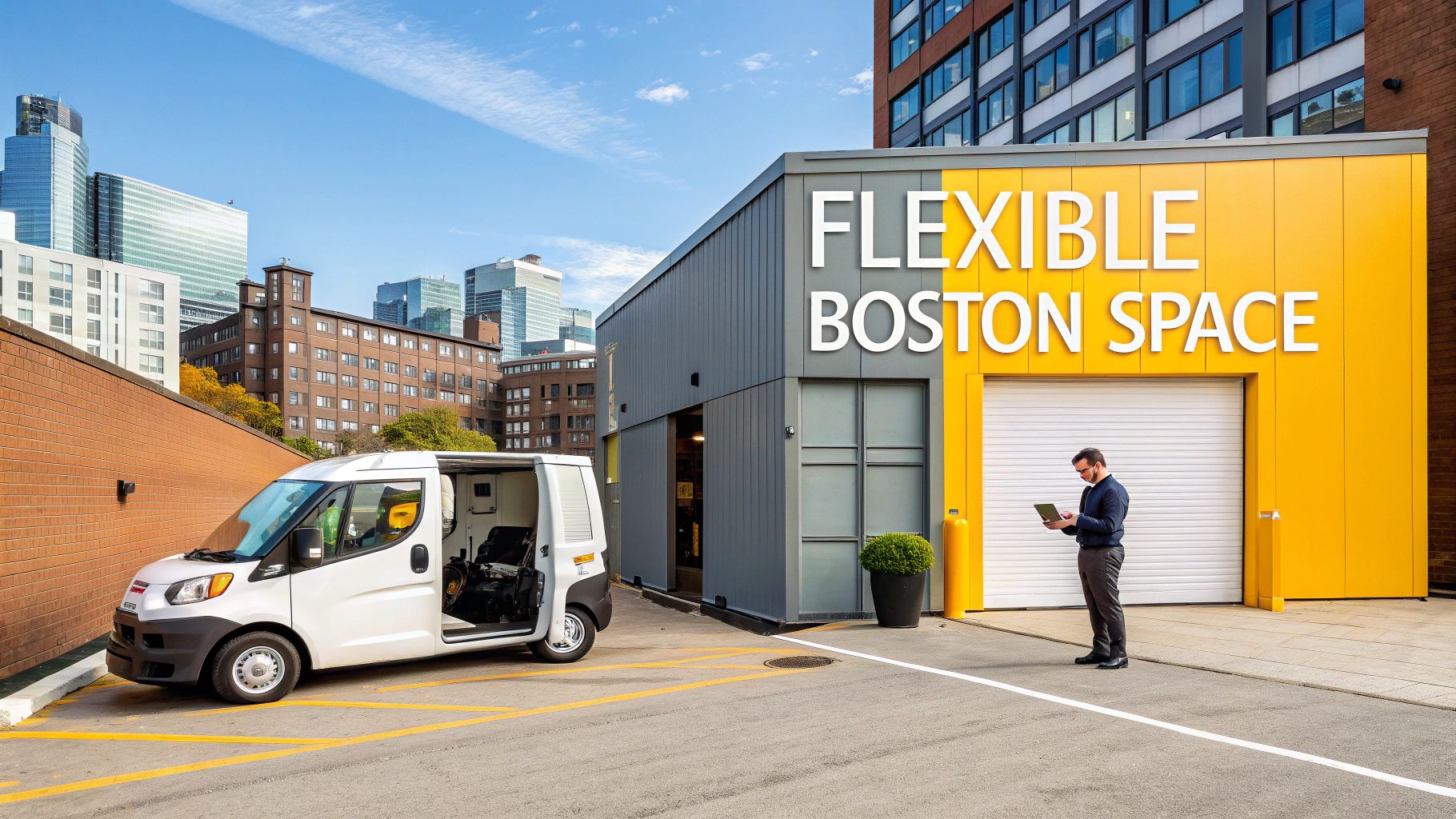
Trying to find the right commercial space in Boston has become a real headache for today's small businesses. The market is flooded with massive, expensive warehouses built for giants like Amazon, leaving a huge gap for nimble companies that need smaller, more adaptable solutions. This disconnect is forcing a lot of local entrepreneurs to get creative with how they rent space.
The old-school Triple Net (NNN) lease, which used to be the only game in town for Boston-area businesses, just isn’t cutting it anymore. These rigid deals often demand commitments of three to five years or more, saddling businesses with fixed costs and a footprint that just doesn’t make sense for their changing needs.
A Market Mismatch
This one-size-fits-all model is a poor fit for Boston’s diverse business scene. An e-commerce seller in Southie needs room to ramp up for the holiday rush, not a bill for empty shelves the other nine months of the year. In the same way, a contractor from Quincy needs a spot to stage materials for a big downtown project, but doesn't need to be tied to that warehouse forever.
The root of the problem is a severe lack of the right kind of inventory. While giant distribution centers keep popping up along Route 128, the actual demand is for smaller, accessible spaces in the 5,000 to 15,000 square foot range. That scarcity is driving prices through the roof and pushing businesses into less-than-ideal terms.
The challenge today isn’t just about finding a space in the Boston area. It’s about securing one that gives you room to maneuver. Businesses need the freedom to grow, pivot, and adapt without being weighed down by a costly, long-term real estate anchor.
This new reality brings up a critical question: how can a small business find affordable, scalable space without taking on a high-risk, long-term lease in Boston? The answer is to ditch the outdated models and embrace flexible, service-based solutions that move at the speed of modern business.
It also helps to keep an eye on how technology is changing the game. You can get a better sense of what's coming by exploring the latest developments in commercial real estate technology.
How to Accurately Define Your Space Requirements
Before you even start browsing commercial listings, the single most important thing you can do is take a hard look at your own operations. Jumping into the Boston market without a crystal-clear picture of your needs is the fastest way to overpay for space you don't use—or worse, lock yourself into a lease that actively holds your business back.
Forget about guessing a square footage number. Instead, think about how your business actually flows. If you’re running a product-based company, this means getting real about your inventory velocity. How fast do goods really move from your receiving door to your shipping door?
Slow-moving inventory demands more long-term storage, plain and simple. On the other hand, a high-velocity operation might need more open staging area near a loading dock than it needs sheer pallet capacity.
Look Beyond the Floor Plan
Your space needs are a direct reflection of your business model, not just a number on a page. You have to consider the unique demands of your industry, especially here in the Greater Boston area.
A biotech firm in Waltham storing sensitive reagents has a completely different set of requirements than a contractor in Medford staging construction materials for a job site. It’s night and day.
Don't just plan for your average Tuesday. Your requirements document should be built around your busiest, most chaotic periods. If you run a seasonal business, like a beverage distributor gearing up for summer on the Cape, your peak inventory levels should define your absolute minimum space needs.
Thinking through these peak scenarios from the start means you won't be scrambling for last-minute overflow storage during your most profitable months. This kind of foresight is what keeps you efficient and prevents costly bottlenecks right when it matters most.
Creating a Detailed Requirements Checklist
To turn your operational needs into a concrete list, build a checklist. This document will become your North Star when you’re evaluating different spaces in and around Boston and is absolutely essential for getting accurate quotes from landlords or storage providers.
Here are a few critical points every Boston-area business should nail down:
- Pallet Positions: How many standard 40" x 48" pallets do you truly need to store at any given time? Make sure you factor in seasonal spikes and any realistic growth you see happening over the next 12-18 months.
- Access & Equipment: Do you need a ground-level, drive-in door for vans and trucks, or do you need a raised loading dock that can handle a tractor-trailer? Get specific about whether you’ll need access to forklifts, pallet jacks, or other heavy equipment.
- Climate & Security: Will your inventory get ruined by New England’s temperature swings? For many industries, from food products to electronics, climate control is non-negotiable. At the same time, define any specific security needs you might have.
- Specialized Needs: Does your operation require specific racking, like cantilever racks for lumber or specialized shelving for archived records? Detail these unique needs upfront.
By creating this detailed blueprint, you shift from vaguely "renting space for a small business" to strategically securing an operational asset that will actually help you grow. That clarity will save you an incredible amount of time, money, and headaches down the road.
Comparing Traditional Leases and Flexible Warehousing
Once you’ve nailed down your exact space needs, it’s time to decide how you’re going to secure it. For most businesses in the Boston area, this boils down to two very different paths: signing a traditional commercial lease or partnering with a flexible, on-demand warehousing provider. Each route has major financial and operational consequences, so it's critical to know what you’re getting into.
The traditional Triple Net (NNN) lease has been the standard for decades, but its cost structure can be surprisingly complex—and expensive. The base rent you see on paper is just the tip of the iceberg.
Unpacking the True Cost of a Traditional Lease
When you sign a NNN lease, you're not just paying for your square footage. You're also on the hook for the building’s operating expenses, which can swing wildly from one year to the next. These "hidden costs" fall into three main buckets:
- Property Taxes: You'll be responsible for your pro-rata share of the property taxes for the entire building.
- Building Insurance: You contribute to the landlord's insurance policy that covers the physical structure.
- Common Area Maintenance (CAM): This is a catch-all category for everything from landscaping and winter snow removal to parking lot repairs and security for shared spaces.
These expenses get reconciled annually, which often means a surprise bill lands on your desk if costs were higher than projected. This makes budgeting a nightmare and can put a serious strain on cash flow, especially for a growing company.
The biggest risk of a NNN lease is its rigidity. You're typically locked into a 3-5 year term, forcing you to pay for space you might not need in slower months while leaving you scrambling for overflow storage during your peak season.
In sharp contrast, flexible or fractional warehousing offers a much simpler, all-inclusive pricing model. You pay only for the exact amount of space and services you use, usually on a month-to-month basis. This approach turns a fixed overhead expense into a variable operating cost that scales up and down with your business activity. To learn more about how this works, check out our guide on the ins and outs of warehouse storage.
This decision tree helps visualize how core factors—like size, access, and climate needs—should guide your thinking.
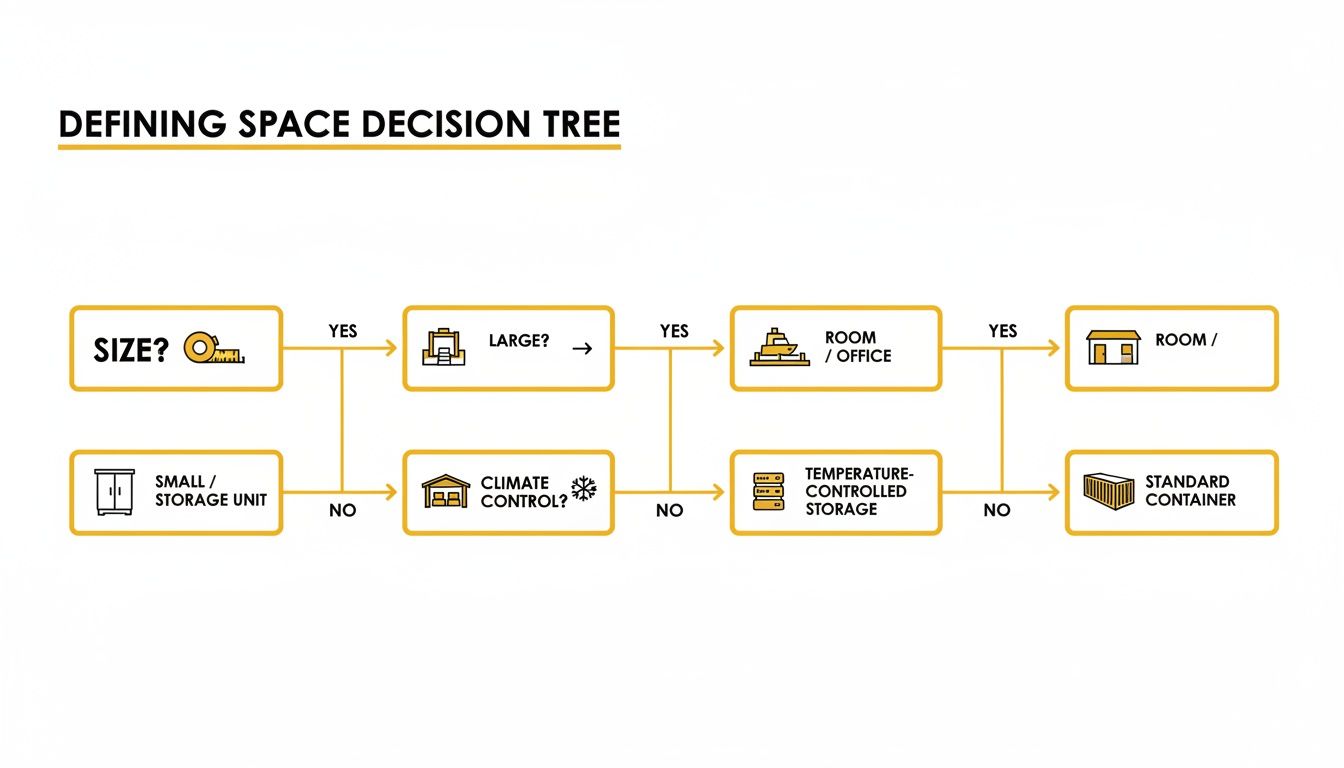
By breaking down your requirements this way, it becomes much clearer whether a rigid long-term lease or a flexible solution is the smarter move for your business.
A Head-to-Head Comparison
The differences between these two models are stark, especially when you start looking at the fine print. Here’s a quick breakdown of what you can expect in the Boston market.
| Feature | Traditional NNN Lease | Fractional Warehousing (OnDemand Storage) |
|---|---|---|
| Commitment | Long-term, typically 3-5 years. | Flexible, often month-to-month. |
| Cost Structure | Base rent plus variable NNN costs (taxes, insurance, CAM). Unpredictable annual reconciliation. | All-inclusive monthly rate. Covers space, utilities, security, and basic services. |
| Scalability | Fixed space. Difficult and costly to scale up or down. | Highly scalable. Easily adjust your footprint based on seasonal or project-based needs. |
| Upfront Costs | High. First/last month's rent, security deposit, broker fees, and fit-out expenses. | Low to none. No long-term deposits or major capital outlay required. |
| Operational Overhead | You manage everything. Staffing, equipment (forklifts, racking), security, and maintenance. | Managed for you. Access to shared equipment, staff, and operational support is included. |
| Best For | Established businesses with predictable, long-term space needs and the capital for build-out. | Startups, seasonal businesses, and companies needing agility to respond to market changes. |
As you can see, the choice isn't just about cost per square foot; it's about total cost of ownership, flexibility, and operational burden. For many small and growing businesses in Boston, the agility of fractional warehousing is a clear winner.
Getting the Paperwork Right in Massachusetts
Whether you’re looking at a traditional lease or a flexible warehousing agreement, the fine print is where your business is either protected or exposed. Renting commercial space in Massachusetts means getting comfortable with some legal language and knowing exactly what to look for before you sign on the dotted line. Think of this as your negotiation playbook.
With a standard commercial lease, a few key clauses demand your full attention. The term length is the most obvious one, but don’t gloss over the renewal options. A good renewal clause gives you the stability of staying put without locking you into a ten-year commitment right out of the gate.
Also, keep a sharp eye out for aggressive escalation clauses. These dictate how much your rent will jump each year. A seemingly small percentage can add up to a huge expense over a five-year term, so this is always a major point for negotiation.
Scrutinizing the Details
Once you get past the big-ticket items, you need to dig into the rules that will govern your day-to-day operations.
Subletting restrictions are especially important for Boston-area businesses that need to stay agile. If you sign a long lease and your space needs shrink, being able to sublet a portion of your space can be a financial lifesaver.
Similarly, check the language around alterations and improvements. If you plan to install specialized racking or make other tweaks, make sure the lease doesn’t create a bunch of red tape or stick you with the entire bill for upgrades that ultimately benefit the landlord.
A lease isn't just a rental contract; it's a strategic business document. Every clause, from maintenance responsibilities to insurance requirements, impacts your bottom line and operational freedom. Treat it with the seriousness it deserves.
For businesses leaning toward flexible warehousing, the key document is usually a Service Level Agreement (SLA). This contract lays out what the provider promises to do and the service standards you can expect. Pay close attention to terms related to:
- Access Hours: Make sure the facility’s hours actually work for your business, especially if you handle shipments early in the morning or late at night.
- Inventory Management: Get clarity on their process for receiving, storing, and shipping goods. How is inventory tracked? What kind of reports will you get?
- Liability: This is a big one. Who is responsible if your goods are damaged or lost? A solid SLA will clearly define the provider’s liability and insurance coverage.
Gaining a Negotiation Advantage
Understanding what’s happening in the local Boston market gives you leverage. By March 2025, national industrial rents were on the rise, with new leases commanding a hefty premium. At the same time, vacancies in massive warehouses were also creeping up, while smaller units under 50,000 square feet stayed in high demand with rock-bottom vacancy rates.
Landlords of these smaller spaces know they have the upper hand and are holding firm on rent. Knowing these trends helps you frame your negotiations in reality. You can find more insights on why smaller industrial spaces are in high demand on rweiler.com.
Armed with this knowledge, don't be afraid to push back. Whether you’re asking for a cap on annual rent increases or more flexible access hours in an SLA, a well-reasoned request backed by market data can lead to a much better deal that protects your business for years to come.
Planning Your Move and Operational Setup

Getting the keys to your new space is a huge win, but now the real work starts. A smooth transition is all about careful planning to keep your business running with as little downtime as possible. If you’re moving into your own leased space, the logistics are all on you.
This means you're in charge of everything from coordinating movers and transferring utilities to planning the physical layout of your racking and workstations. For a solid game plan, a good guide to commercial moving solutions can help you see around corners and tackle challenges before they become problems.
Onboarding with a Full-Service Partner
Opted for a flexible warehousing partner instead? Smart move. The process is a whole lot simpler. Forget "moving in"—it's more like an onboarding process designed to get their team and your operations in sync from day one.
It all kicks off with receiving your initial inventory. Once your products hit their loading dock, their team takes the lead:
- Intake and Inspection: They'll unload everything, run a count, and inspect your goods to make sure it all matches your packing lists.
- System Integration: Next, your inventory gets logged into their warehouse management system (WMS), giving you a live, real-time view of your stock.
- Strategic Storage: From there, items are palletized, wrapped, and put away in the best possible location for easy and efficient access down the line.
A full-service onboarding is designed to get you up and running almost immediately. Instead of managing the chaos of a DIY move, you have a dedicated team handling the heavy lifting so you can stay focused on your business.
Once your inventory is squared away, you can start building out your operational workflows, like setting up new fulfillment protocols for your eCommerce orders or coordinating white-glove deliveries for your Boston-area customers.
Minimizing Disruption and Maximizing Efficiency
No matter which route you take, clear communication is your best friend. Give your team, suppliers, and customers a heads-up about the move well in advance. Create a clear timeline and delegate specific tasks to your staff so nothing slips through the cracks.
For some local insights, our guide on preparing for moving day in Boston has practical tips for navigating the city's unique logistical quirks.
By mapping out every step, you turn what could be a chaotic relocation into a clean, smooth transition. That foresight is what ensures your new space is boosting your efficiency from the moment you open the doors.
Why Boston's Smartest Businesses Choose Flexible Space
In a market as competitive as Boston, agility isn't just a buzzword—it's the difference between thriving and just surviving. The sharpest business owners I talk to are realizing that locking up precious capital in a long-term, rigid NNN lease is a massive strategic disadvantage. Flexible space completely flips the script, turning what was once a fixed liability into a variable, manageable expense.
This shift immediately frees up cash flow. That money can go directly back into what actually grows the business: marketing, product development, and hiring top talent. Instead of paying for empty square footage during your slow season, your operational costs scale directly with your revenue. It just creates a much healthier, more resilient business model.
Real-World Agility in Action
The true power of this flexibility really clicks when you see how different Boston-area businesses are using it. Each one is leveraging on-demand space to solve a specific, high-stakes operational problem.
- E-commerce Brands: A retailer I know in Somerville can instantly scale up their inventory storage for the holiday rush, then shrink it right back down in January. They only ever pay for the space they're actually using.
- Biotech Firms: Think about a Cambridge-based lab. They can securely store sensitive, climate-controlled materials off-site, which keeps them compliant and frees up extremely valuable lab space without a huge real estate investment.
- Local Contractors: A construction company can stage all their equipment and materials right near a big downtown Boston project. This move alone streamlines their logistics and helps them dodge those costly on-site delays.
The core advantage is crystal clear: operational agility allows you to say "yes" to opportunities. Whether it's landing a huge contract or capitalizing on a seasonal trend, flexible space provides the backbone to execute without being held back by real estate.
This isn't just a niche trend; it's reshaping the entire industrial market. While mega-warehouses are seeing rising vacancies nationally, the demand for "micro-flex" spaces under 50,000 sq. ft. is absolutely booming. These small-bay units are commanding premium rents and maintaining vacancy rates below 4% because they perfectly match the needs of modern businesses.
You can dig into more data on the rise of the micro-flex market at personalwarehouse.com. Our guide on how to best approach business use for commercial storage also offers more insights. By choosing flexibility, you're aligning your business with the most dynamic and successful part of the market.
Common Questions About Renting Business Space
Jumping into the world of commercial real estate always brings up a ton of questions, especially when you’re trying to run your business at the same time. We get it. Here are some straightforward answers to the things we hear most often from business owners in the Boston area.
What Is Fractional Warehousing? Is It Just a Fancy Storage Unit?
Not even close. Fractional warehousing is a complete logistics service where you only pay for the exact space and professional help you use. It's a world away from a basic self-storage unit.
Think of it like this: a storage unit gives you an empty box and a key. You do all the work. Fractional warehousing, on the other hand, gives you a fully managed, operational extension of your business.
- Full Service: It comes with professional staff who handle receiving, inventorying, palletizing, and shipping your goods.
- The Right Equipment: You get immediate access to loading docks, forklifts, and professional inventory management systems—no extra cost.
- Built for Business: This is a solution designed for active operations, not just parking stuff you don't need.
It’s essentially like having an outsourced warehouse team, which is perfect for companies that need real logistics support without the massive overhead of leasing and staffing their own building.
How Much Does Commercial Space Actually Cost to Rent Around Boston?
Commercial space costs in Greater Boston are all over the map, depending on the location, building class, and the type of lease. For a traditional Triple Net (NNN) lease, you can expect to see base rents anywhere from $15 to over $25 per square foot. But that's just the starting point.
The key thing to remember with an NNN lease is that you're also on the hook for property taxes, insurance, and all common area maintenance. These variable costs can easily tack on an extra 20-30% or more to your total annual bill, which often means unpredictable expenses.
Flexible warehousing flips that model on its head. It gives you a predictable, all-inclusive monthly cost based on your specific pallet count or square footage. This helps you dodge those surprise bills and avoid the hefty security deposits that come with a multi-year lease.
For a growing business, that kind of budget transparency is a game-changer.
What Are the Biggest Mistakes to Avoid When Renting My First Commercial Space?
The single most common—and most expensive—mistake we see is signing a long-term lease (usually 3-5 years) for more space than you need right now, betting that you'll grow into it. It feels optimistic, but it's a huge gamble that locks up critical cash in fixed overhead. You end up paying for empty, unproductive space for years.
Another major pitfall is underestimating the hidden costs and management headaches that come with a standard NNN lease. Before you sign anything, do a detailed audit of what you truly need and seriously consider flexible options. A solution that can scale up or down with your business without locking you into a long-term, high-risk commitment is almost always the smarter move.
Ready to find a smarter, more flexible space solution for your Boston-area business? The experts at OnDemand Storage can provide a fast, accurate quote based on your specific needs, helping you avoid costly leases and scale with confidence. Get in touch with us today!