



Imagine trying to run your business without knowing what equipment you own, where it is, or if it even works. It sounds chaotic, but it's a reality for many companies. This is exactly the problem that hardware asset management (HAM) is designed to solve.
Forget about complex software for a moment. At its heart, HAM is the hands-on process of tracking your physical assets through their entire lifecycle. For any growing Boston-area business, especially those juggling inventory, equipment, and limited space, mastering this physical discipline is an absolutely critical task.
What Is Hardware Asset Management for Boston Businesses?
Hardware asset management is the real-world system for managing and tracking your company's tangible equipment. This isn't about software dashboards; it's about the physical logistics of knowing what you own and where it is at all times. Think of it as a living, breathing 'census' for all your valuable business property, from servers and specialized machinery to pallet jacks and trade show materials.
For a Boston contractor, this could be the difference between having high-value tools securely stored in a managed warehouse in Medford versus scrambling to find them scattered across multiple job sites. For a local hospitality group, it means efficiently managing kitchen equipment and furnishings for multiple restaurants from a central storage space in Braintree.
HAM gives you the physical control needed to run a smoother, more profitable operation. When you can see, touch, and track every important asset, you stop wasting money replacing lost items and start maximizing the value of what you already own.
The Focus on Physical Logistics
While HAM is a key part of the broader field of IT Asset Management (ITAM), our focus here is purely on the physical side of things. The core challenge for so many Boston businesses isn’t a lack of data—it's a lack of physical organization and space.
An effective HAM strategy directly addresses these logistical headaches:
- Receiving and Tracking: You need a single, controlled point where all new assets arrive. This is where they get inspected, tagged, and logged into your system before going anywhere else.
- Secure Storage: Instead of cluttering your own facility, you can use dedicated, professional space—like a fractional warehouse or a small industrial unit for rent—to store assets that aren't in active use. This protects them from damage, loss, or theft.
- Staging and Deployment: It's all about getting organized. Equipment for specific jobs or deliveries can be prepped and staged, ensuring everything is ready to go without any last-minute chaos.
- Specialized Distribution: Managing the careful transport of sensitive or bulky equipment is a huge piece of the puzzle, from crating and palletizing to final-mile delivery across New England.
This approach turns hardware asset management from an administrative chore into a real strategic advantage. By working with a logistics partner for managed warehousing or renting flexible industrial space, Boston businesses can build a robust HAM system without the massive overhead of leasing and staffing their own facility. It’s about creating a disciplined, physical workflow that strengthens your entire operation.
The Seven Stages of the Hardware Lifecycle
Every piece of equipment in your business has a story. It begins the day you buy it and ends the moment you retire it. For businesses in Boston and beyond, understanding this journey—what we call the hardware asset lifecycle—is the secret to smart hardware asset management. This isn't just some abstract business theory; it's a practical roadmap for tracking your assets, cutting costs, and boosting efficiency.
Think of it like a restaurant group opening a new location in the Seaport. They don't just order ovens, tables, and POS systems and hope for the best. They manage them through a predictable cycle of planning, storing, deploying, and eventually replacing them. It’s this structured approach that prevents chaos and protects their bottom line.
Without a clear lifecycle framework, things get messy—and expensive.
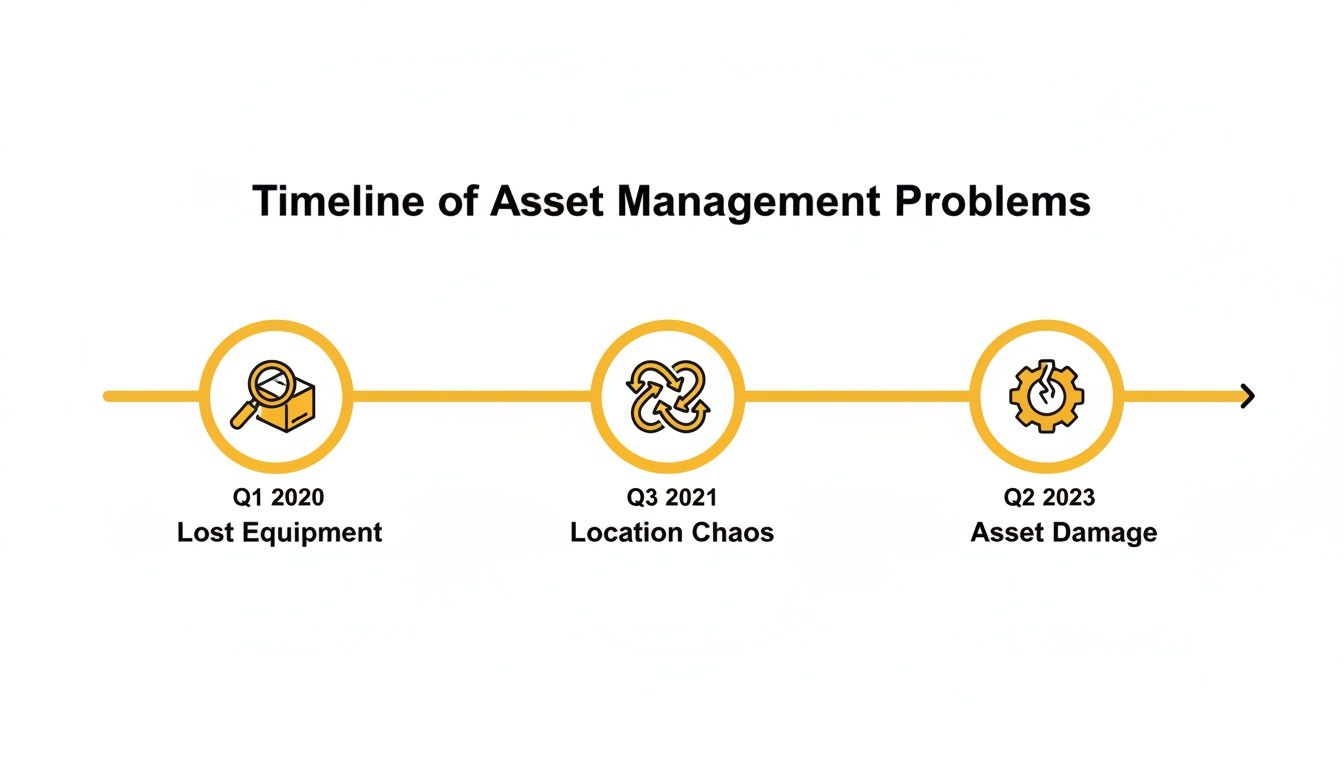
As you can see, problems like lost tools, disorganized inventory, and damaged equipment are almost always the direct result of a broken, end-to-end management process.
1. Procurement and Inventorying
The story starts with procurement. This is where you decide what you need, why you need it, and go out and buy it. But the most critical part happens right after: inventorying. This is where each new asset is received, given a unique ID tag (like a barcode or QR code), and logged into a central record. Get this wrong, and you're flying blind from day one.
Imagine a construction company in Quincy ordering a batch of new power tools. Instead of having them dropped off at a hectic job site where they could get lost or damaged, they're sent to a managed warehouse in Rockland. A logistics partner there receives the shipment, verifies everything is correct, tags each tool, and logs its serial number, model, and purchase date. Just like that, you have a single source of truth for every asset.
2. Staging and Storage
Once inventoried, your assets move into staging and storage. Staging is all about getting the equipment ready for its specific role. This could be anything from assembling furniture for a hotel renovation to organizing materials for a specific construction job.
At the same time, storage is about keeping those assets safe and sound until they’re needed. For a Boston-area biotech firm, this might mean keeping sensitive lab equipment in a climate-controlled Braintree facility. This protects it from temperature swings and damage before it’s time to install it in their new Cambridge lab.
Strategic staging and storage are the unsung heroes of hardware asset management. When you use a professional warehousing service, you turn a cluttered backroom into a secure, organized command center for your company's most valuable physical assets.
This ensures your equipment is protected, easy to locate, and ready to go at a moment's notice.
3. Deployment and Maintenance
Deployment is when the asset goes live. It’s the process of moving equipment from storage to its final work location. Sometimes it’s as simple as delivering a pallet of supplies across town. Other times, it's a complex, multi-site installation across New England. A logistics partner with specialized distribution services can handle it all, from crating and palletizing to final-mile "white glove" delivery.
Once an asset is deployed, the focus shifts to maintenance. Regular servicing, repairs, and performance checks are what extend the usable life of your hardware and maximize your ROI. By tracking maintenance schedules as part of your HAM process, you can make sure no piece of equipment falls through the cracks.
4. Retirement
The final stage is retirement, or disposal. When an asset is old, broken, or simply obsolete, it needs to be taken out of service properly and responsibly. This means documenting its disposal and choosing an eco-friendly method for recycling or discarding it.
For a lot of businesses, this is a huge logistical headache. A warehousing partner can simplify the whole process by consolidating retired assets from multiple locations and coordinating their proper disposal. This keeps your operations streamlined and environmentally responsible.
The hardware asset management market is projected to hit USD 35.8 billion by 2035 in North America alone, which shows just how critical this lifecycle control has become. For facilities managers across the Boston area, where inventory sprawl is a constant fight, a structured process helps stop the buildup of "ghost assets"—items that are lost or broken but still on the books, inflating balance sheets by up to 20%. You can learn more about the financial side of HAM by checking out the full industry analysis.
Why Smart Asset Management Is Critical for Local Industries
For Boston’s diverse local industries, effective hardware asset management isn't just about tidying up a spreadsheet—it's a real competitive advantage. It's the difference between your physical assets being a logistical headache and a source of financial strength. When done right, it has a direct, positive impact on your bottom line.
Think about a local beverage distributor gearing up for the busy summer season. They need extra space for kegs, portable bars, and event equipment, but only for a few months. Instead of getting locked into an expensive, year-round warehouse lease, they use fractional warehousing. This way, they can manage their seasonal inventory spike efficiently, paying only for the space and services they actually need.
This is the kind of strategic thinking that separates thriving companies from those bogged down by unnecessary overhead. It’s about making smarter decisions that create a positive ripple effect across the entire business, from financial planning all the way to customer service.
Slash Costs and Boost Operational Efficiency
The most immediate benefit of a strong hardware asset management plan is a major drop in costs. Once you have a crystal-clear view of what you own and where it is, you stop wasting money on things you don't need. No more buying new tools just because the ones you have are lost somewhere on a job site.
Take a manufacturer in the Greater Boston area. They can partner with a logistics provider to crate and store critical machine parts. These components are inventoried, kept safe, and ready for just-in-time delivery to the factory floor. This simple move prevents costly production delays and wipes out the high cost of rush-ordering spare parts.
By optimizing your asset lifecycle, you can rack up some serious financial wins:
- Eliminate Redundant Spending: Stop buying equipment you already own but can't find.
- Reduce Storage Overhead: Use flexible warehousing or small industrial spaces for rent instead of getting stuck with expensive, long-term leases for space you don't always use.
- Boost Equipment Uptime: A managed process ensures your assets are properly maintained and ready to go, minimizing expensive downtime.
A disciplined HAM strategy delivers a powerful return on investment through smarter financial control and enhanced operational efficiency. It’s about shifting from reactive spending to proactive management of your physical resources.
This kind of control over your physical assets isn’t just about saving a few bucks. It's about building a more resilient and efficient operation that can adapt to whatever the market throws at it. To see how this works in practice, check out our insights on why a third-party logistics partnership is a smart move for modern businesses.
Enhance Security for High-Value Assets
For many businesses in the Boston area—especially in biotech, tech, and healthcare—asset security is a top priority. These industries depend on expensive, sensitive, and often regulated hardware. A casual "we'll figure it out" approach to management just doesn't work when a single piece of equipment can be worth tens or even hundreds of thousands of dollars.
Imagine a biotech firm in Cambridge with delicate lab instruments. Storing that equipment in a generic, unsecured space is a huge risk. A far better approach is using a secure, climate-controlled warehouse in a location like Braintree. This ensures these high-value assets are protected from theft, damage, and environmental changes.
This intense focus on physical hardware is reflected in the market data. Hardware's role in the IT asset management space is dominant, with a projected 53.65% market share in 2025. For operations managers at Boston biotech firms or even municipalities using climate-controlled storage in Easton or Braintree, this number highlights just how critical it is to track physical assets. Proper tracking helps curb location-based risks and avoids the steep depreciation hits that can silently chip away 15-20% of an asset's value each year. You can dive deeper into this trend by exploring the full market report.
Practical Steps to Master Your Physical Assets
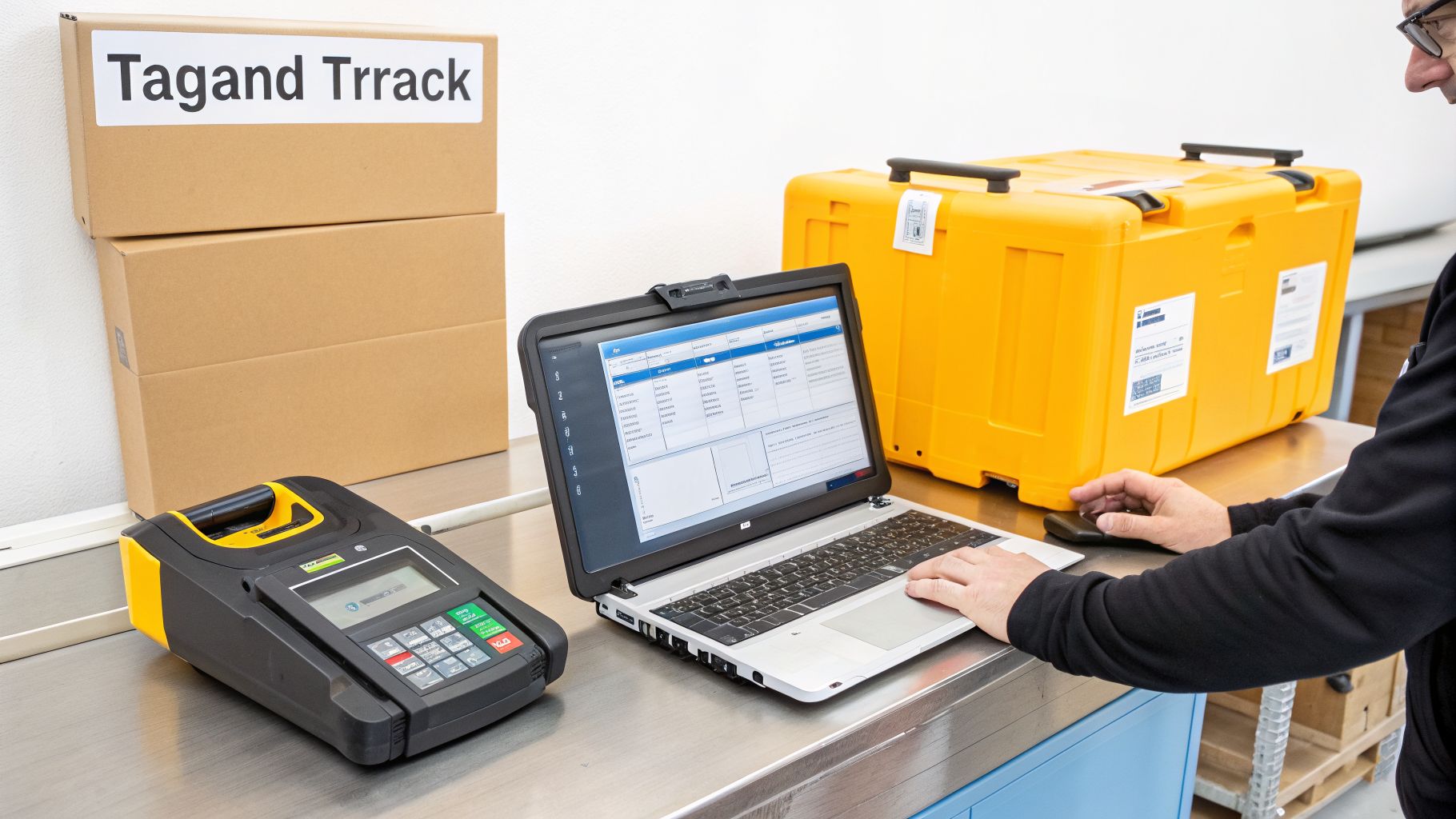
Ready to finally get a handle on your company’s physical hardware? Building a solid hardware asset management process isn’t some complex, technical overhaul. It really just starts with simple, practical steps rooted in discipline and organization. The goal is to create a reliable system for tracking your valuable equipment from the second it walks in the door.
Think of it like a library system for your business assets. Every single item gets a unique identity and a clear record of where it is and what it’s doing. This is the foundational control that helps Boston-area businesses stop losing money on misplaced gear and start making smarter operational moves.
Centralize Your Receiving Process
The first and most important step is to set up a single, centralized receiving point for all new assets. When equipment shipments are arriving all over the place—a busy job site in downtown Boston, a satellite office in Quincy, or an employee's house—it's next to impossible to keep accurate records. Chaos becomes the default.
Instead, all new hardware must be routed to one controlled environment. For a lot of growing businesses, this is where a smart partnership makes all the difference. Using a managed warehouse in a place like Medford or Rockland gives you an instant, professional intake hub without the headache.
A centralized receiving process is the bedrock of reliable hardware asset management. It creates a single source of truth for your inventory from day one, eliminating the guesswork and disorganization that lead to asset loss.
When every asset starts its journey in the same place, you gain immediate control. It’s a simple change, but it instills the discipline you need to see what’s going on and manage your equipment effectively.
Implement a Consistent Tagging System
Once you have a central receiving point, the next move is to give every asset a unique identity. A consistent asset tagging system is absolutely essential. This doesn't have to be super high-tech. For many, simple and durable barcode labels are the most effective way to go.
The process itself is straightforward:
- Assign a Unique ID: An asset arrives at your central receiving point (like a Braintree warehouse) and is immediately assigned a unique ID number.
- Create and Apply a Tag: A physical tag with this ID and a scannable barcode is securely attached to the equipment.
- Log Critical Data: Key information—like the serial number, model, purchase date, and cost—is entered into your tracking records and linked to that unique ID.
This consistent process makes sure that every single piece of equipment, from a pallet jack to a server, is accounted for. It turns a random pile of "stuff" into a managed portfolio of valuable business assets. This step is so fundamental that knowing what to look for in a warehouse storage facility is a key part of getting your logistics partnership right from the start.
Partner for Discipline and Focus
For many Boston businesses, the biggest obstacle to effective hardware asset management isn't a lack of trying—it’s a lack of time, space, and people. Your operations team is busy focusing on the core business, not running a stockroom.
This is where fractional warehousing or renting small industrial spaces becomes a game-changer. By partnering with a logistics provider, you offload the entire physical burden of receiving, tagging, and inventorying your assets. Your partner brings the secure space, the trained staff, and the disciplined process, freeing up your team to focus on what they do best. It’s a strategic move that professionalizes your HAM strategy without the massive cost of building it all yourself.
How a Warehousing Partner Supercharges Your HAM Strategy
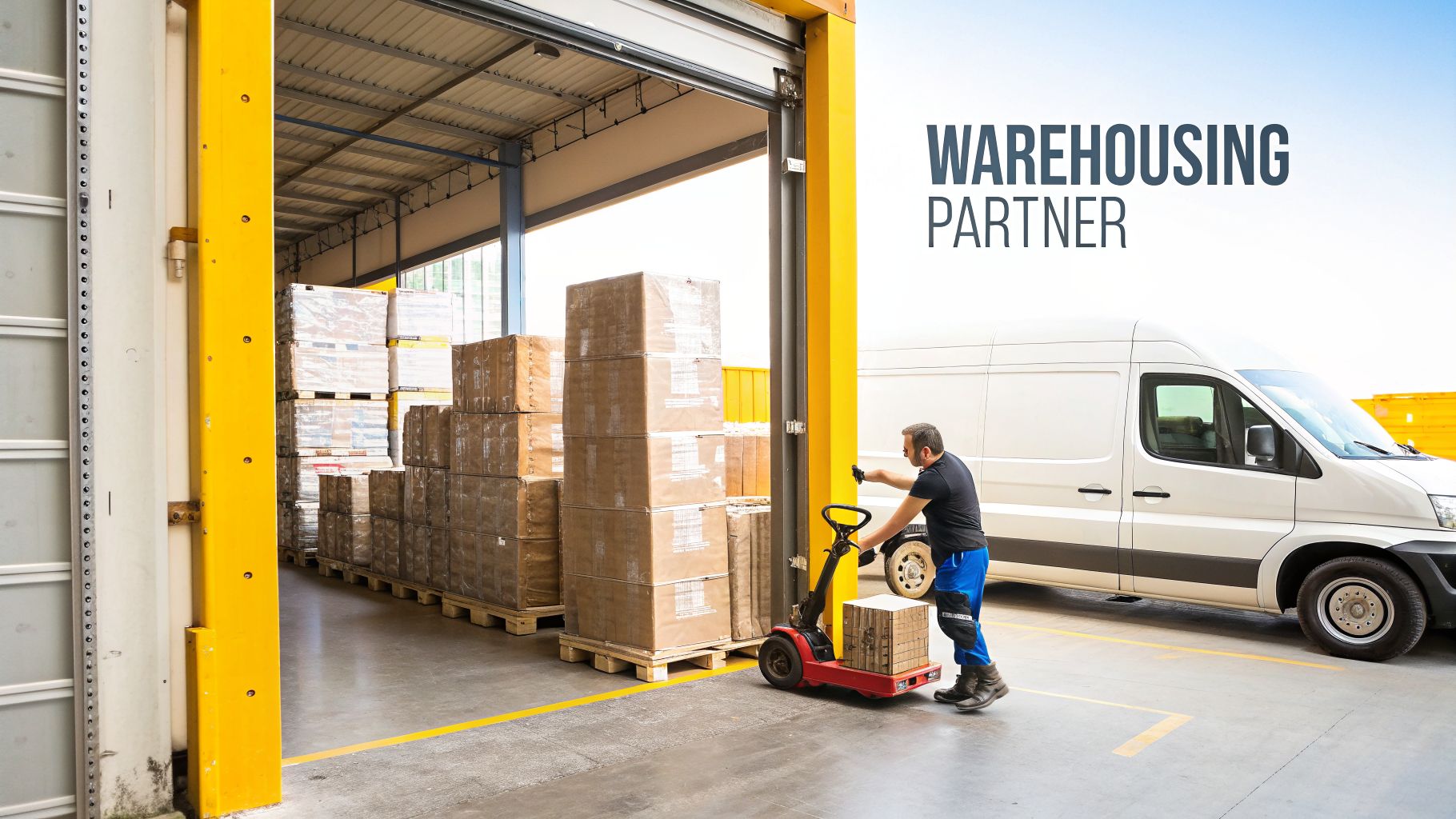
This is where your hardware asset management strategy moves beyond theory and becomes a powerful, scalable part of your operation. For many growing businesses, the physical logistics of storing, staging, and deploying equipment is the single biggest hurdle. A logistics partnership turns this challenge into a major competitive advantage.
Instead of getting bogged down by the complexities of managing physical assets, you can offload the entire process to a team of experts. This frees up your people to focus on core business activities, all while ensuring your valuable hardware is handled with professional care. It’s a strategic move that delivers control, efficiency, and peace of mind.
The Power of Fractional Warehousing
For businesses needing professional asset storage without the steep cost and commitment of a long-term lease, fractional warehousing is the perfect solution. It lets you pay for only the space you use, scaling up or down as your needs change. This model is ideal for managing seasonal inventory, staging project materials, or just storing overflow equipment.
Think of a local events company gearing up for a busy summer. They can store staging equipment, lighting, and sound systems in a secure facility, knowing it’s all organized and ready for deployment. This completely eliminates the need to rent a costly warehouse year-round, turning a fixed overhead into a flexible operating expense. To really nail this, adopting modern IT Asset Management Best Practices is a must for any business looking to master its physical assets.
Fractional warehousing is more than just overflow storage; it's a strategic tool for financial agility. It gives Boston businesses access to enterprise-grade logistics infrastructure without the enterprise-grade price tag.
By using shared space and professional services, you get all the benefits of a full-scale warehouse—security, organization, and expert handling—in a way that actually fits your budget.
Specialized Services That Drive HAM Success
A true warehousing partner provides a lot more than just four walls and a roof. Specialized services are what make a hardware asset management program tick, protecting your assets and making them easy to track, access, and deploy. These aren't just "add-ons"; they're fundamental to running a world-class HAM process affordably.
These critical services include:
- Custom Crating and Palletizing: For delicate or bulky equipment, custom crating ensures maximum protection during storage and transport. Palletizing standardizes your inventory, making it incredibly simple to move and track with precision.
- Organized Racking and Storage: A professionally managed warehouse uses industrial racking systems to keep your assets organized, accessible, and safe from damage. It’s a world away from a cluttered back room.
- Specialized Distribution: Whether you need equipment delivered to a job site in downtown Boston or a new office in Worcester, a logistics partner manages the entire distribution process, ensuring your assets arrive on time and in perfect condition.
This integrated approach is exactly what modern businesses need. The global hardware asset management market is projected to surge from USD 33.50 billion in 2025 to USD 98.08 billion by 2035, a trend fueled by increasing physical infrastructure complexity. This rapid growth highlights the massive hidden costs that small businesses face from poor tracking, but it also creates opportunities for logistics partners that integrate strong HAM principles into their services.
Creating a Strategic Hub for Your Operations
One of the biggest advantages of working with a logistics partner is gaining access to a network of strategically located facilities. For businesses operating across Eastern Massachusetts, having warehouses in key locations like Rockland, Easton, Braintree, and Medford creates a powerful central hub for all your operational activities.
This network allows you to:
- Streamline Staging: Prepare and organize all necessary equipment for a specific project or installation at a nearby facility, which cuts down on travel time and complexity.
- Centralize Inventory: Consolidate your assets in one or more secure locations, providing a single source of truth for your entire inventory.
- Optimize Distribution: Fulfill delivery requests quickly and efficiently by dispatching assets from the warehouse closest to the final destination.
The key takeaway is simple: you don’t have to manage the physical complexity of hardware asset management all by yourself. A partner provides the space, staff, and systems you need to run an effective program without the overwhelming cost and effort. It is an ideal commercial storage solution for businesses of all sizes.
Common Questions About Hardware Asset Management
Even with a clear strategy in place, many Boston business owners and operations managers have practical questions about getting a hardware asset management process off the ground. We get it. Here are some straightforward answers to the questions we hear most often, with a focus on real-world advice and the value of a physical logistics partner.
Is Formal Hardware Asset Management Necessary for a Small Business?
Absolutely. For a small Boston-area business, every piece of equipment is a major investment. Losing a single high-value tool or server doesn't just sting—it directly hits your bottom line.
You don't need a complex system overnight. A simple HAM process, even if it starts with a spreadsheet and a dedicated storage corner, is enough to prevent wasteful spending and get the most value out of everything you own. Using a fractional warehousing service can be a smart, cost-effective way to professionalize your storage and tracking without a huge upfront investment.
What Is the Difference Between Asset Management and Inventory?
Think of it this way: a simple inventory is a snapshot in time. It tells you what you have right now. Hardware asset management is the entire movie—it tracks an asset's complete lifecycle from the day you buy it to the day you get rid of it. This includes its cost, maintenance history, condition, and current location.
An inventory list might show '5 pallet jacks.' A HAM system shows two are new, one is at your main facility, two are stored in a Rockland warehouse, and one is due for maintenance. HAM gives you the intelligence to make smarter financial and operational decisions.
How Can a Warehousing Service Improve My Asset Management?
A professional warehousing partner acts as the physical backbone for your entire HAM strategy. Instead of assets being scattered across job sites or cluttered in a back room, they are centrally received, inventoried, and stored in a secure, controlled environment.
This creates a single source of truth for where all your assets are. Services like custom crating protect high-value equipment, while logistics support for staging and specialized distribution ensures everything gets where it needs to be, on time and in perfect condition. It effectively offloads the entire physical burden of HAM.
When Should We Switch from In-House Storage to an Outside Partner?
Most businesses start to feel the squeeze. You should seriously consider a partner when you hit these common growing pains: you're running out of space, assets are frequently lost or damaged, your team spends too much time on logistics instead of their core work, or you’re facing a big project that requires temporary staging space.
If you find yourself avoiding buying needed equipment simply because you have nowhere to put it, or you're thinking about a costly long-term lease just for overflow, it's the perfect time to explore flexible warehousing solutions in the Boston area. It's a scalable way to solve your storage challenges without adding fixed overhead.
Ready to take control of your hardware without the headache? OnDemand Storage provides flexible, secure, and professional warehousing and logistics services designed for Boston-area businesses. Learn more about how we can supercharge your hardware asset management strategy by visiting https://www.ondemandstorage.com.