



When you're searching for "climate controlled storage near me" in the Boston area, you're not just looking for a room with a lock. You need a real defense against New England's notoriously wild weather swings—a solution that actively manages both temperature and humidity to keep your belongings safe.
Why Boston's Weather Makes Climate Control a Must-Have
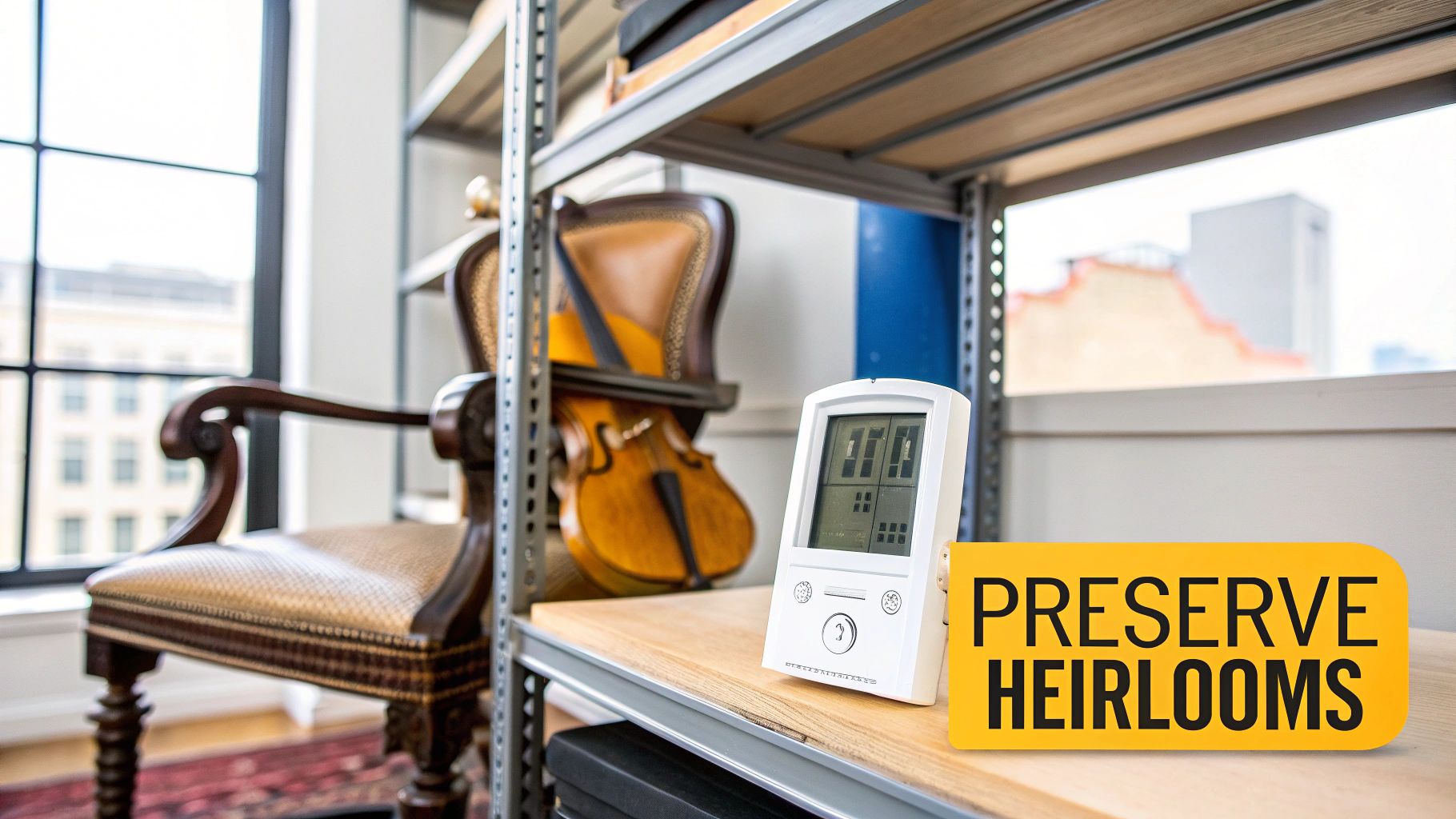
Anyone who lives here knows the deal. We get all four seasons in their most extreme forms. From suffocating, humid summers that roll in off the Atlantic to frigid, bone-dry winters that freeze the Charles River, the climate can be brutal. A standard storage unit—often just a metal box on a concrete slab—acts like an oven in July and a freezer in January. That’s a disaster waiting to happen for your stuff.
This is where climate-controlled storage steps in as an essential, not just a nice-to-have. True climate control isn’t just about heat and A/C; it manages two critical environmental factors:
- Temperature: These units maintain a steady range, usually between 55 and 80 degrees Fahrenheit, protecting items from the damaging expansion and contraction caused by extreme heat and cold.
- Humidity: This is the big one for a coastal city like Boston. Regulating the moisture in the air is crucial to prevent mold, mildew, rust, and warping.
The Real Risks of Boston’s Climate
Picture this: you store your great-grandmother’s antique wooden desk from a Beacon Hill apartment in a standard unit. During a typical Boston summer, the oppressive humidity makes the wood swell and warp. Then, come winter, the dry, freezing air causes it to shrink and crack. In just one year, that priceless heirloom could be ruined beyond repair.
This isn’t just a hypothetical. We've seen it happen time and time again across Greater Boston.
- Electronics corrode from moisture, leading to short-circuits.
- Business inventory and important documents are quickly destroyed by mold and mildew.
- Musical instruments, like a cherished guitar or piano, can crack, warp, or completely fall out of tune.
Think of a climate-controlled unit as an insurance policy against the elements. It’s a smart investment in preserving both the financial and sentimental value of your belongings, ensuring they come out of storage looking exactly as they did going in.
To help you decide what needs that extra protection, here's a quick reference guide for common items vulnerable to Boston's seasonal extremes.
Which Items Need Climate Control in Boston
| Item Type | Risk From Boston Summer (High Humidity/Heat) | Risk From Boston Winter (Freezing Temps/Dry Air) | How Climate Control Protects |
|---|---|---|---|
| Wooden Furniture | Swelling, warping, mold growth | Cracking, splitting, joint separation | Maintains stable humidity and temperature to prevent wood damage. |
| Electronics | Corrosion, internal moisture damage, short-circuiting | Brittle plastic casings, screen damage | Keeps moisture low and prevents extreme temperature fluctuations. |
| Musical Instruments | Wood warping, glue weakening, rust on strings | Wood cracking, becoming out of tune | Provides a consistent environment to preserve delicate materials. |
| Artwork & Photos | Mold, mildew, paper sticking to glass, paint cracking | Brittle canvas or paper, paint flaking | Regulates humidity to stop fungal growth and moisture damage. |
| Important Documents | Paper degradation, mold, ink smudging | Paper becoming brittle and fragile | Prevents moisture from ruining paper and ink. |
| Leather Goods | Mildew, discoloration | Cracking, becoming stiff | Controls humidity to keep leather supple and free of mold. |
Ultimately, almost anything you wouldn't feel comfortable storing in a garage or shed for a year needs climate control, especially in a place with weather as intense as Boston.
A Growing Need for Protection
It's not just a local trend; the demand for this level of protection is exploding. The global climate-controlled self-storage market hit USD 8.3 billion in 2024 and is on track to reach USD 14.7 billion by 2033. This surge is largely driven by people in urban areas like Boston needing to protect sensitive electronics and furniture from weather damage, with North America making up 58% of the market. You can dig into the numbers yourself over at DataHorizon Research to see how widespread this has become.
Winter is an especially critical time for protection. If you want to get ahead of the game, check out our top winter storage tips. At the end of the day, choosing climate-controlled storage in Boston isn't just about renting space—it's about buying peace of mind.
Decoding the Features of a Quality Boston Storage Unit
When you're searching for "climate controlled storage near me" in Boston, it’s easy to get lost in a sea of marketing promises. Let's be real: not all climate-controlled units are created equal. A quality facility offers much more than a simple thermostat; it's a complete system designed to protect your belongings from every angle. Knowing what to look for is the key to making a smart investment.
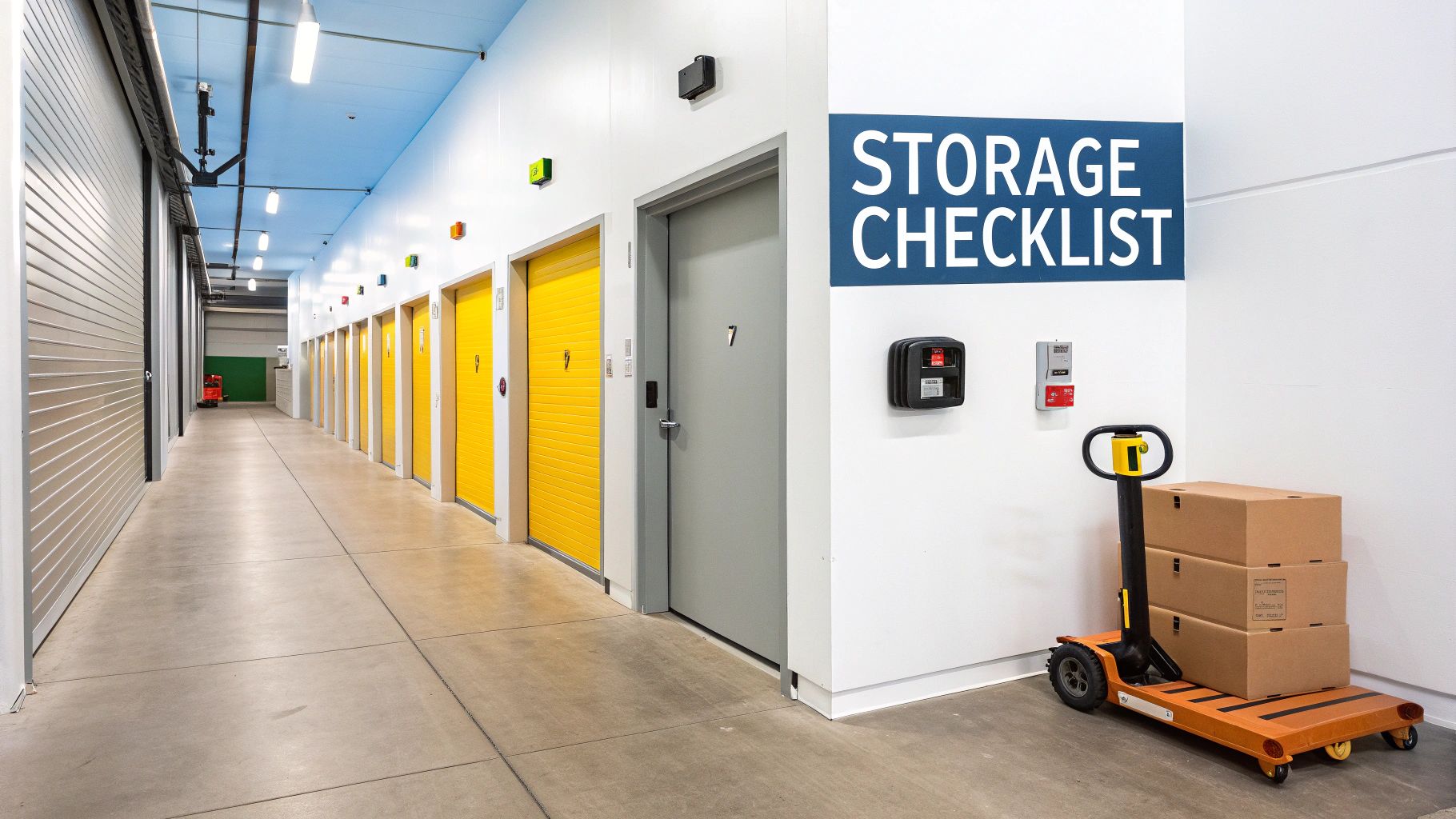
The first thing to investigate is the climate management system itself. This isn't just about escaping the brutal extremes of a Boston summer or a frigid winter. True climate control is about maintaining a stable, predictable environment all year long.
- Temperature Range: You'll want a facility that can promise a consistent temperature, usually somewhere between 55 and 80 degrees Fahrenheit. This stability is what prevents the expansion and contraction that can wreak havoc on everything from antique wooden furniture to sensitive electronics.
- Humidity Control: In our damp, coastal climate, this is absolutely non-negotiable. A reputable Boston facility will actively manage humidity to keep it below 55%. Anything higher is an open invitation for mold and mildew, which can completely destroy documents, artwork, and fabrics.
Security and Access in Boston Facilities
Beyond the climate, a top-tier storage facility in the Boston area has to deliver on security. Your belongings are valuable, and the peace of mind that comes with knowing they're locked down is priceless. A simple padlock on the door just doesn't cut it anymore.
A truly secure storage facility uses a layered defense system. Think of it like a fortress—multiple barriers work together to deter and prevent unauthorized access, ensuring your items are protected 24/7.
Look for a facility that combines these security features:
- 24/7 Video Surveillance: Cameras should be everywhere—covering entry points, hallways, and loading areas.
- Gated Access: Keypad entry is a must, ensuring only authorized people can even get onto the property.
- Individual Unit Alarms: This is a fantastic extra layer of protection that alerts management if your specific unit is breached.
- On-Site Staff: Having actual people present during business hours adds a human element of security and provides help when you need it.
Logistics and Handling Equipment
Finally, think about the practical side of things—how you'll actually move your items in, out, and around the facility. This is especially crucial for Boston business owners. The best facilities get that storage is just one part of a bigger logistical puzzle, and having the right equipment on hand can make a world of difference.
Imagine trying to unload heavy pallets of inventory without a proper loading dock or a pallet jack. It's a logistical nightmare. For businesses in areas like the Seaport District, Cambridge, or the surrounding suburbs, having access to these tools is essential for efficiency. A quality facility should offer:
- Loading Docks: For a safe and seamless transfer of goods from your truck.
- Freight Elevators: Absolutely essential for accessing units on upper floors without breaking your back.
- Pallet Jacks and Carts: These should be available for you to use, making it easy to move heavy or bulky items.
- Flexible Access Hours: Look for hours that work with your schedule, not against it.
When you're checking out a facility, don't just stop at the price. Dig into these specific features. A unit that checks all these boxes offers genuine protection and real value, making sure your belongings are safe, secure, and ready when you need them.
Critical Questions to Ask Before Signing a Lease in Boston
Once you've narrowed your search to a few facilities in the Boston area, it’s time to dig a little deeper. The conversation you have with the facility manager before signing on the dotted line is your best tool for avoiding headaches later.
Asking the right questions can tell you everything you need to know about the facility's quality and the fairness of their contract. Don't settle for vague answers—you need concrete details to feel confident in your choice.
Pinning Down the Climate and Security Details
First things first, let's talk about the main event: the climate control. Simply asking if they have it isn't enough. You need to get specific to understand exactly what you're paying for.
- "What are your guaranteed temperature and humidity ranges, and how are they monitored?" A top-notch facility should be able to give you exact numbers, like 55-80°F and under 55% humidity. Ask them if they use digital monitoring with alerts—it shows they’re serious about it.
- "What is your backup plan for power outages?" Boston is no stranger to nor'easters and power failures. You need to know if their climate systems are hooked up to a generator. Otherwise, a storm could leave your sensitive items unprotected.
- "Can you describe your pest control program?" This question reveals how proactive they are about keeping the entire building clean and secure, not just your unit.
These questions shift the conversation from a simple sales pitch to a real discussion about their operational standards.
Uncovering All Potential Costs
That attractive monthly rate is just one piece of the financial puzzle. Hidden fees can quickly turn a good deal into an expensive mistake. The goal here is to get a crystal-clear picture of your total monthly bill before you commit.
Your rental agreement should be a document of clarity, not confusion. Make the manager walk you through every line item, explaining every potential charge, from administrative fees to late payment penalties, so there are absolutely no surprises.
Don't be shy. Ask point-blank:
- "Can you walk me through every potential fee on a monthly bill, beyond the rental rate?" This should cover any one-time setup fees, mandatory insurance costs, and even the lock you might have to buy from them.
- "What are the terms of your rent increases?" Find out how much notice they provide and how often they typically adjust rates. No one likes a surprise rent hike.
- "What's the difference in cost between a month-to-month and a long-term contract?" This helps you weigh the flexibility of a short-term lease against the potential savings of a longer commitment.
Getting this financial transparency is crucial. The demand for premium spaces is surging; climate-controlled units are expected to make up 45.36% of total self-storage capacity by 2025. This popularity means facilities can charge more, making it even more important for you to understand every single cost.
Knowing exactly what to ask transforms you from a passive renter into an empowered consumer. It ensures the facility you choose in Boston is the right fit for your needs and your budget. For more insights into the rental process, review our guide covering other important things to consider when renting storage units in Boston.
How to Compare Your Local Boston Storage Options
You’ve got your questions ready, so it’s time to start sizing up the local storage facilities around Boston. The secret to making a good choice without losing your mind? Stay organized. Trust me, trying to remember the details from a half-dozen phone calls and website visits is a recipe for disaster.
A simple comparison spreadsheet is your best friend here. Just list your top three or four local contenders down the side. Then, create columns for the must-haves: price, access hours, security features, and the specific temperature and humidity ranges they promise. This little bit of prep work transforms a messy decision into a clear, side-by-side view of your best bets.
This whole process boils down to a three-part vetting system: inspect the place, question the manager, and review what others are saying. It’s the most reliable way I’ve found to land on the right fit.
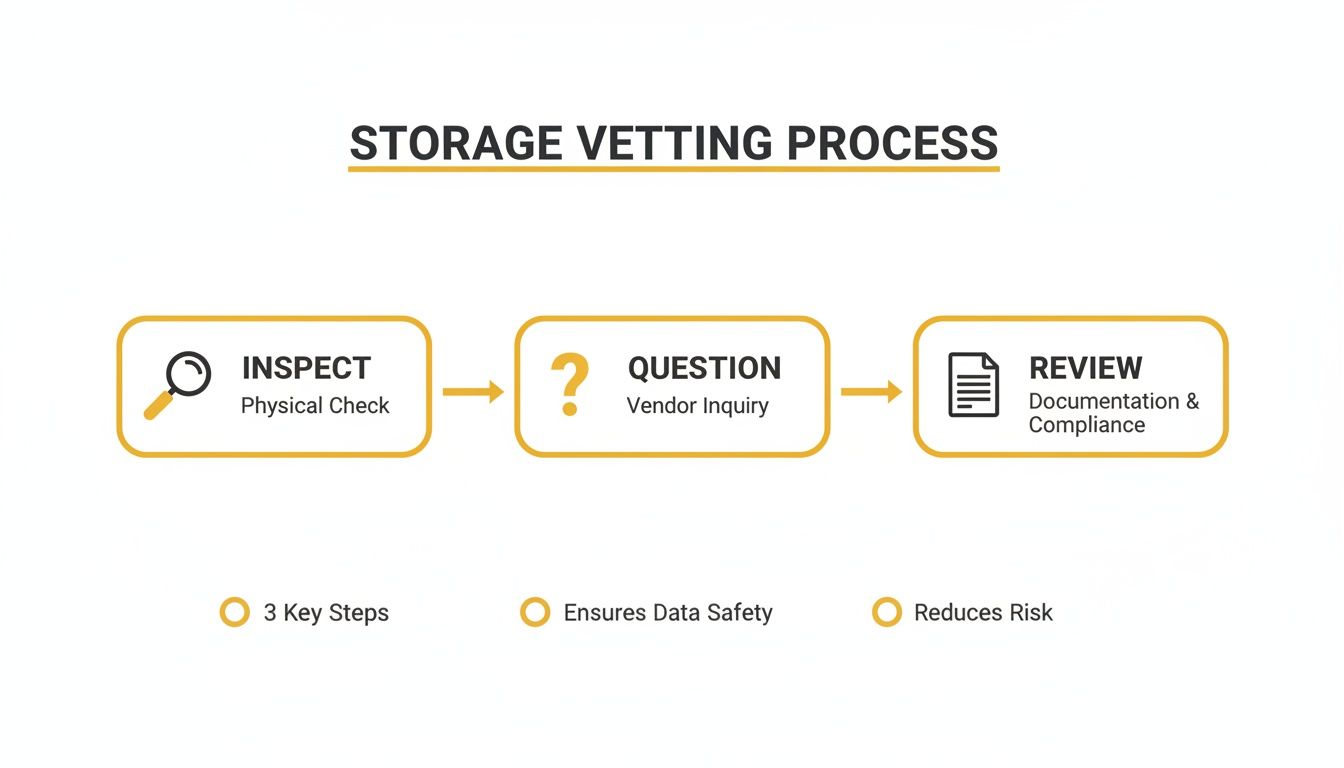
This breakdown shows you exactly how to evaluate any potential "climate controlled storage near me." Each step—Inspection, Questioning, and Review—gives you a fuller picture of what you’re really signing up for.
Digging into Reviews and Ratings
Your spreadsheet is just the starting line. The next move is to see what actual Boston-area customers—both past and present—have to say. Don't just glance at the star rating on Google or Yelp; dive into the comments, especially the recent ones.
Look for trends. Are multiple people complaining about surprise billing hikes, pests, or broken security gates? On the flip side, is there consistent praise for a super-helpful manager or an immaculately kept property? These firsthand accounts are pure gold.
Beyond the usual review sites, it’s worth checking the facility's standing with the Better Business Bureau (BBB). A good rating and a track record of resolving complaints signal a business that takes customer service seriously.
Why an In-Person Visit Is a Non-Negotiable
Finally, and I can't stress this enough, you have to visit your top choices in person. No amount of online digging can replace what you’ll learn from a quick walkthrough. This is your chance to see what the website doesn't show you.
When you’re there, keep your eyes peeled for a few key things:
- Cleanliness: Are the hallways, elevators, and loading docks clean and brightly lit? It’s a dead giveaway for how well the place is managed overall.
- Professionalism: Is the manager on-site friendly, knowledgeable, and happy to answer all your questions without rushing you?
- The Security Vibe: Do the cameras, gates, and locks you read about online look modern and functional, or old and neglected? Always trust your gut—if a place feels off, it probably is.
This last step is what validates all your research and makes sure you’re not walking into any unpleasant surprises. By combining organized data, real customer feedback, and your own in-person impression, you can confidently pick the right climate-controlled storage for your stuff in Boston.
OnDemand Storage for Boston Area Businesses
If you're a business owner in the Boston area, your search for "climate controlled storage near me" has probably led you to a frustrating dead end. You find plenty of traditional self-storage units, but they were built for personal junk, not for the fast-paced needs of a modern company. They're missing the crucial logistical support, flexible space, and operational muscle you need to actually manage inventory or stage materials without a headache.
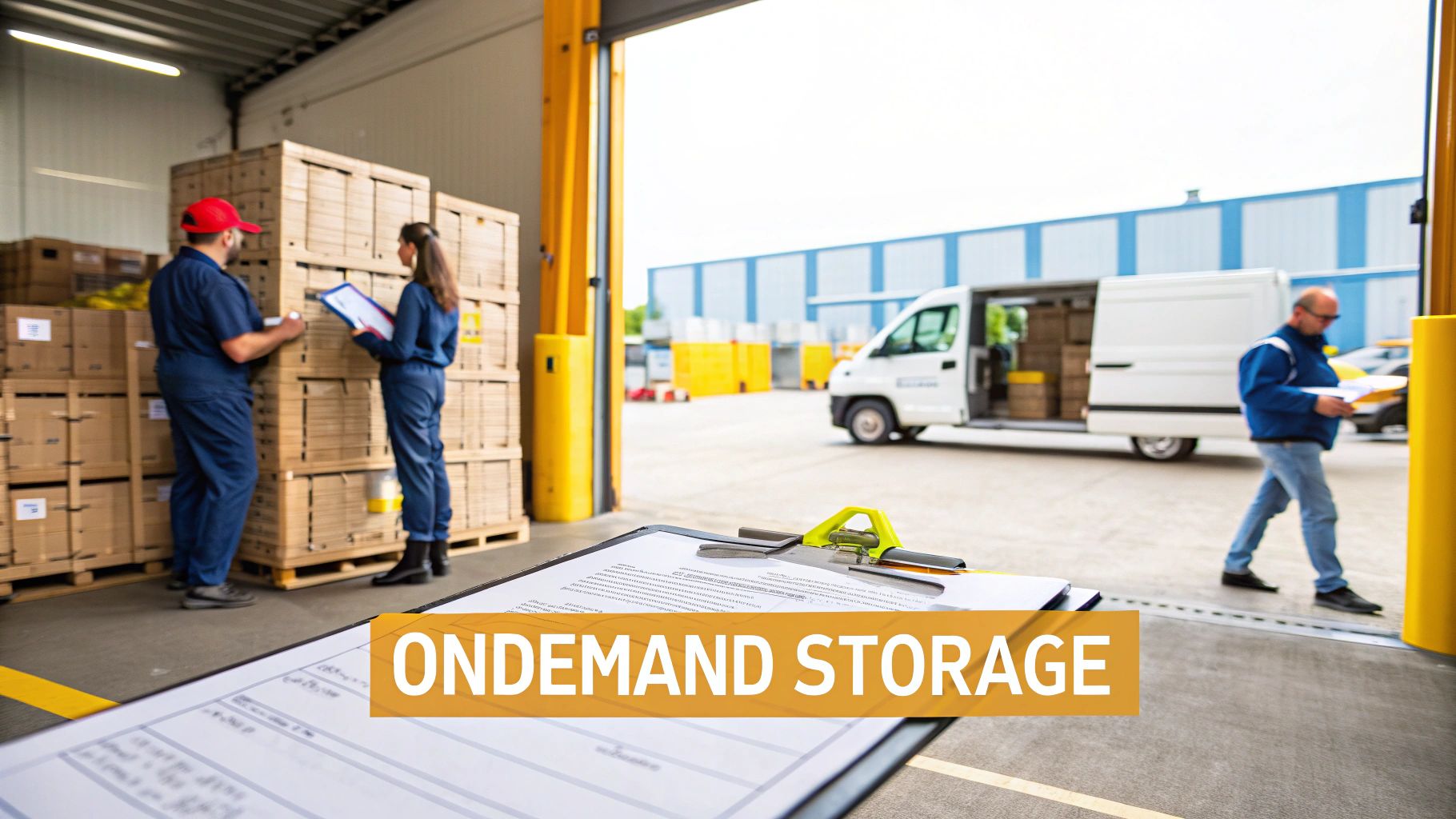
That's exactly where OnDemand Storage comes in. We’re not just another storage company; we're a strategic logistics partner. We built our entire model to solve the real-world problems that businesses across Eastern Massachusetts face, from biotech firms in Cambridge to busy contractors on the South Shore.
More Than Just a Storage Unit
At OnDemand Storage, we don't just give you a key and wish you luck—we manage the entire logistics chain for you. Our secure, climate-controlled facilities in Rockland, Easton, Braintree, and Medford are true commercial warehouses, complete with loading docks, professional handling equipment, and a trained staff to run it all.
Our services are designed to plug directly into your daily operations:
- Receiving & Inventory Management: Shipments can come directly to us. We’ll accept them, inventory everything, and give you real-time updates so you always know what you have.
- White-Glove Delivery: Need something from your inventory? Our team will deliver your items wherever they need to go, whether it’s a job site in Boston or straight to a customer.
- Scalable Space: Forget paying for a half-empty unit. With us, you only pay for the space you use, which means you can easily scale up for a busy season and back down when things quiet down.
Think of us as your outsourced warehouse and logistics department. We provide the space, the people, and the processes to help your business run smoother, freeing your team to focus on core growth activities instead of managing storage.
This agile approach is becoming more critical every day. The self-storage market is expected to hit USD 89.25 billion by 2032, largely because of climate-controlled demand and the explosion of eCommerce. With 25% of all goods now sold directly to consumers, businesses need flexible warehousing without getting trapped in expensive, long-term leases.
Fractional Warehousing: The Smart Alternative to NNN Leases
For a long time, the only real alternative to self-storage for Boston businesses was a cripplingly expensive triple-net (NNN) commercial lease. That meant getting locked into a long-term contract with massive overhead, including taxes, insurance, and maintenance costs that you had to cover.
Our fractional warehousing model completely changes the game. Instead of leasing an entire warehouse that you might not even fully use, you get on-demand access to our professional facilities and services. It's a model that delivers real, tangible value.
- Eliminate Fixed Costs: Say goodbye to the financial dead weight of a long-term lease and all the overhead that comes with it.
- Boost Operational Efficiency: Let our team handle the receiving, sorting, and delivering. Your team can get back to doing what they do best—growing the business.
- Gain a True Logistics Partner: Get the support you need to manage complex inventory and distribution challenges without hiring an in-house team.
Whether you're a local eCommerce brand needing fulfillment support or a biotech firm with sensitive equipment, we have the infrastructure to help you grow. To see how we help local companies thrive, check out our deep dive into commercial storage solutions in Boston.
Answering Your Top Questions About Boston Storage
When you're searching for storage, you're bound to have a few questions. Getting the right answers is the key to making a smart decision, especially when you're trying to protect valuable items from Boston's wild and unpredictable weather. Here are the questions we hear most often from people looking for "climate controlled storage near me."
How Much More Does Climate Controlled Storage Cost in Boston?
It's the first question on everyone's mind. In the Boston area, you can generally expect a climate-controlled unit to cost between 25% and 50% more than a standard, non-regulated one.
That might sound like a big jump, but it’s helpful to think of it as an insurance policy. The cost of replacing antique furniture warped by humidity or fixing electronics fried by a freeze is almost always far higher than the monthly premium for climate control. That price difference pays for the complex HVAC systems and energy needed to keep the environment stable, shielding your belongings from the worst of Boston's weather.
Is Climate Control Really Necessary for Short-Term Storage in Boston?
Honestly, it depends on when you're storing and what you're storing. If you just need a spot for a month during a mild Boston spring or fall, you might be able to get away without it for tougher items like patio furniture or basic tools.
But if your "short-term" rental falls during a classic Boston summer (think July-August humidity) or a deep winter freeze (January-February), climate control becomes a must-have for anything sensitive. High humidity can spark mold growth in just a matter of weeks, and a single cold snap can easily crack wooden instruments or damage musical equipment. For real peace of mind with anything you value, it’s the safest bet, no matter how long you're storing.
Remember, Boston's weather can turn on a dime. What starts as a "mild" month can quickly bring a surprise heatwave or cold front, making climate control the only true guarantee of protection.
What's the Difference Between Temperature Controlled and Climate Controlled?
This is a huge one, and it's a distinction many people miss. "Temperature-controlled" usually just means the facility pumps in heat in the winter and A/C in the summer. It only solves half the problem.
"Climate-controlled" is the whole package—it manages both temperature and humidity. As a coastal city, Boston's real enemy is often humidity. That excess moisture in the air is what leads to mold, mildew, rust, and rot. When you're comparing facilities, always ask if they actively manage humidity levels. If they only talk about heating and cooling, they aren't offering true climate control.
Can I Use a Personal Storage Unit for My Business Inventory?
You can, but it’s almost never a good idea for a growing Boston business. Standard self-storage facilities are designed for personal belongings and come with some major roadblocks that can really slow down business operations.
- Limited Access: Many facilities lock their gates early, making it a nightmare to manage inventory after a long day or on weekends.
- Zero Logistics Support: Most places don't have loading docks, pallet jacks, or staff who can receive shipments for you. That means you have to be there for every single delivery.
- Wasted Space and Money: You're stuck paying for a fixed-size unit, even when your inventory shrinks during the slow season.
A commercial storage partner gives you a full logistics solution, not just an empty room. It’s a system built to support how your Boston business actually runs, making it a much smarter and more scalable choice than a simple personal unit.
For Boston-area businesses that need more than just a locked room, OnDemand Storage offers a true logistics partnership. We provide scalable, climate-controlled warehousing with the professional services you need to grow. Learn more about our flexible commercial solutions.